How it works
Prove it once. Carry it all year.
Today you prove yourself again and again, to every app, school and platform, and fakes still get through. Fuzzy turns one quick check into a badge you own and share wherever you need it.
Free for you on iPhone, Android and the web.
Start to finish
Five steps. One sitting.
No laptop, printer, notary or appointment. Nobody asks you to come back later with a document.
-
Get the app, or start on the web
Fuzzy is free on iPhone, Android and the web. Setup is an email address, so your badge has somewhere to live. That’s it. We ask for almost nothing up front, because every field we skip is one we never have to keep.
-
ID, selfie and liveness
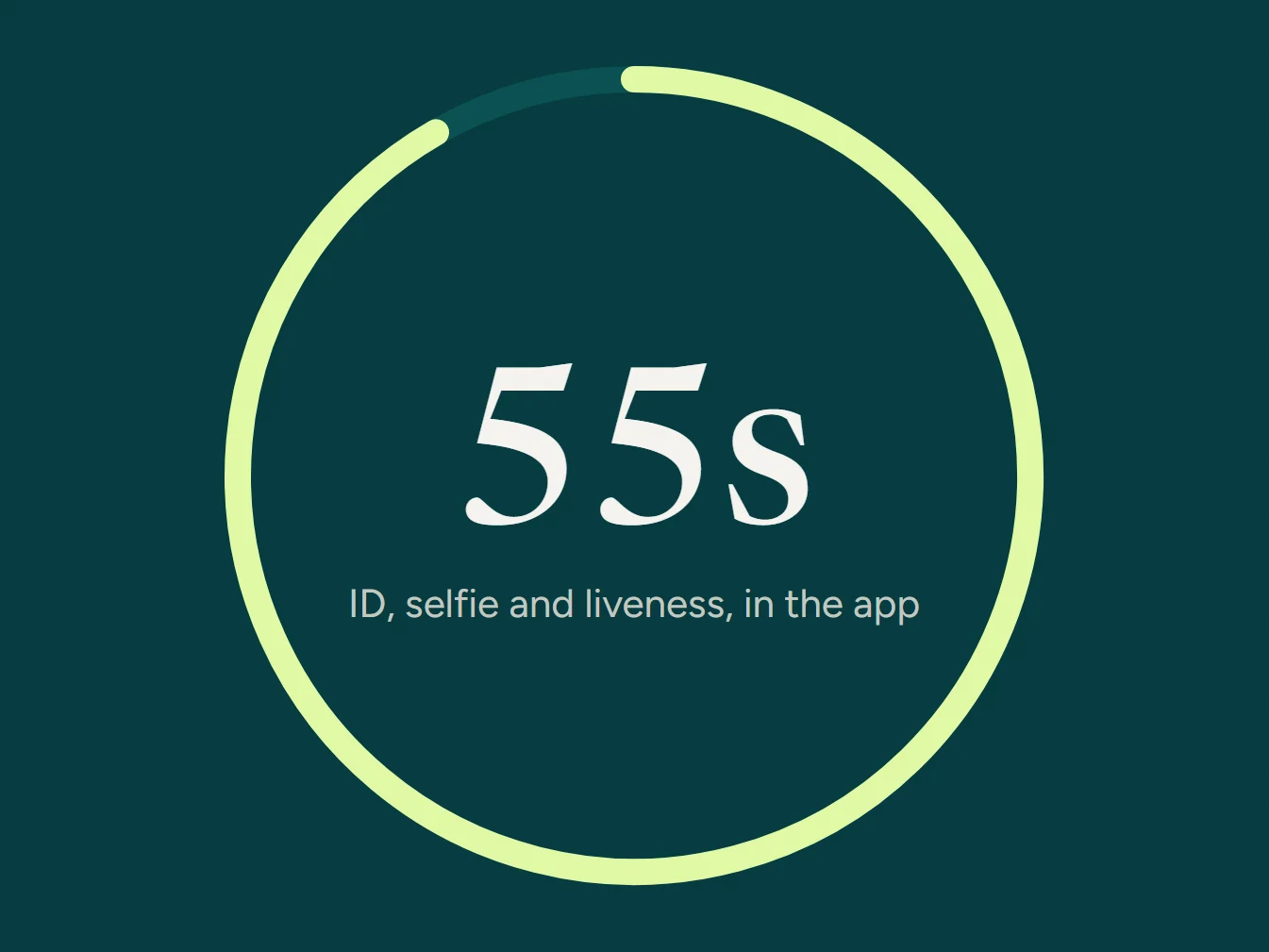
Photograph a driver’s license or passport, then take a short live selfie that proves a real person is there right now. It takes about 55 seconds in the app. Incode, our identity provider, runs the check and matches your face to your document on their side.
-
Your badge goes live
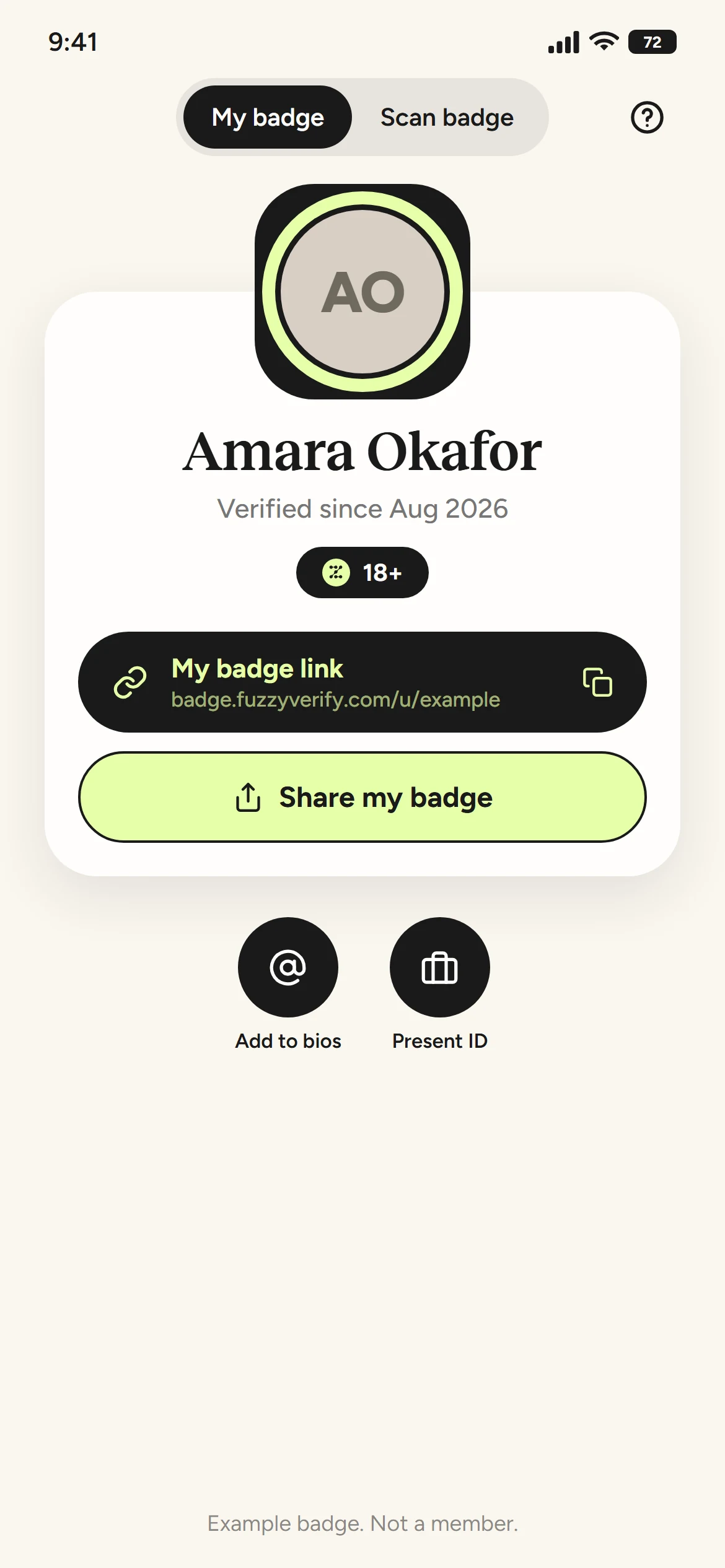
You get a badge at an address that’s yours: your name, your photo, verified and since when, plus 18+ if you’re over 18. It stays live for its full 12 month term.
-
Share it
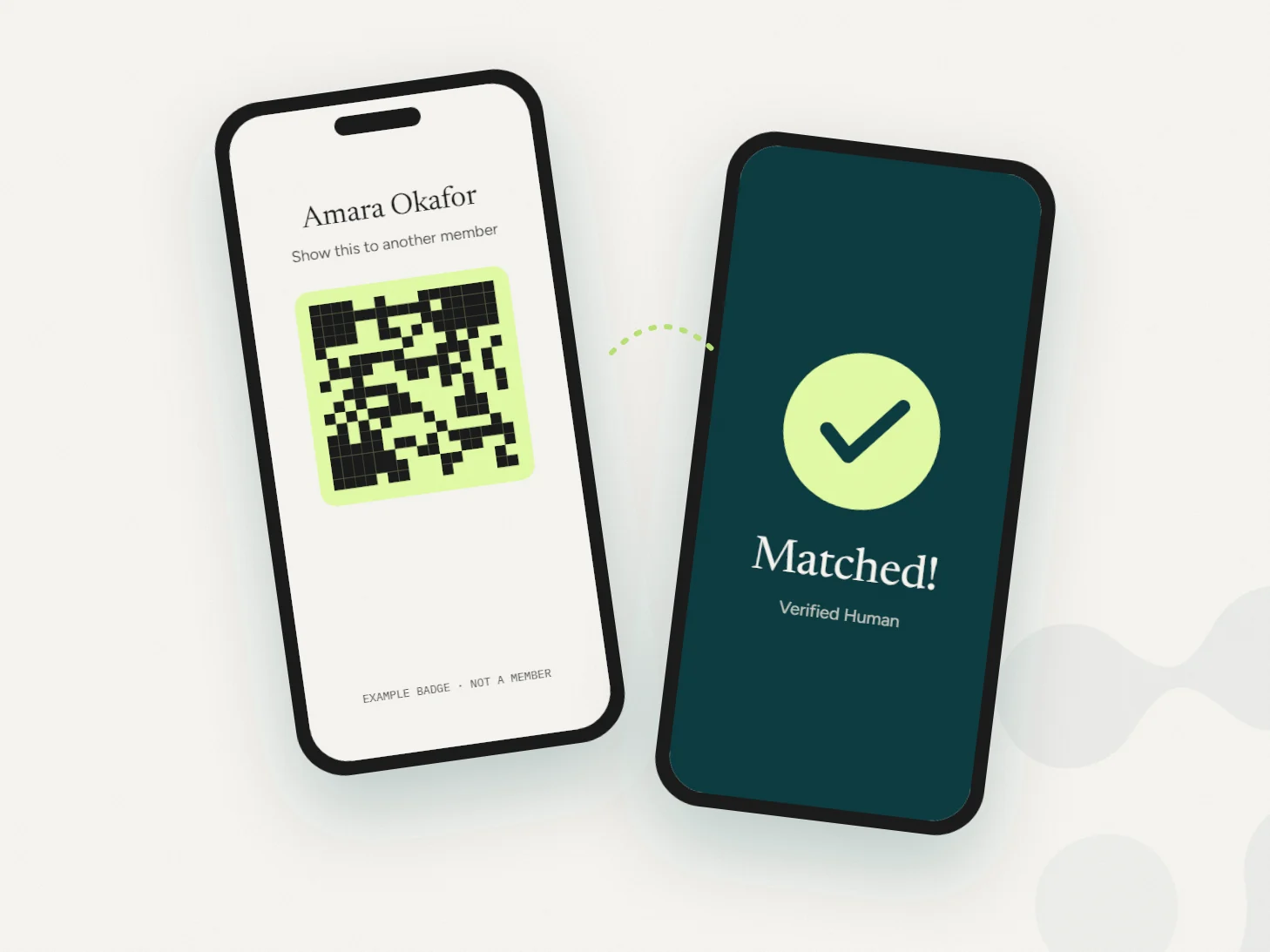
Drop your badge link in a bio, a message or an email signature. Anyone can open it, with no app and no account. In person, another Fuzzy member can scan your QR in their app.
-
Renew every 12 months
Renewal is the same full quick check, and we remind you before it’s due. A yearly proof stays true without turning your life into a checkpoint.
Sharing
A link for anyone. A scan for members.
Your badge has to work for the person on the other side, on the phone already in their hand.
- Your badge link opens anywhere. No app, no account, no sign-up for the person checking.
- Your QR is member to member. Another Fuzzy member scans it in their app when you meet.
- Bring your people. Send your badge to friends and family and invite them to get one. It’s worth more when the person on the other side has one too.
What someone sees
Enough to know you’re real. Nothing more.
On your badge
- Your name as it appears on your ID
- Your badge photo: your verification selfie, never your ID photo
- That you’re verified, and since when
- 18+ if you’re over 18
Never shown
- Your ID document
- Your date of birth
- Your address
Your badge photo is meant to be seen. Anyone with your link can see it, and messaging apps show it in link previews, so share your link wherever you’d share a profile photo.
The 18+ answer
A yes, without your birthday.
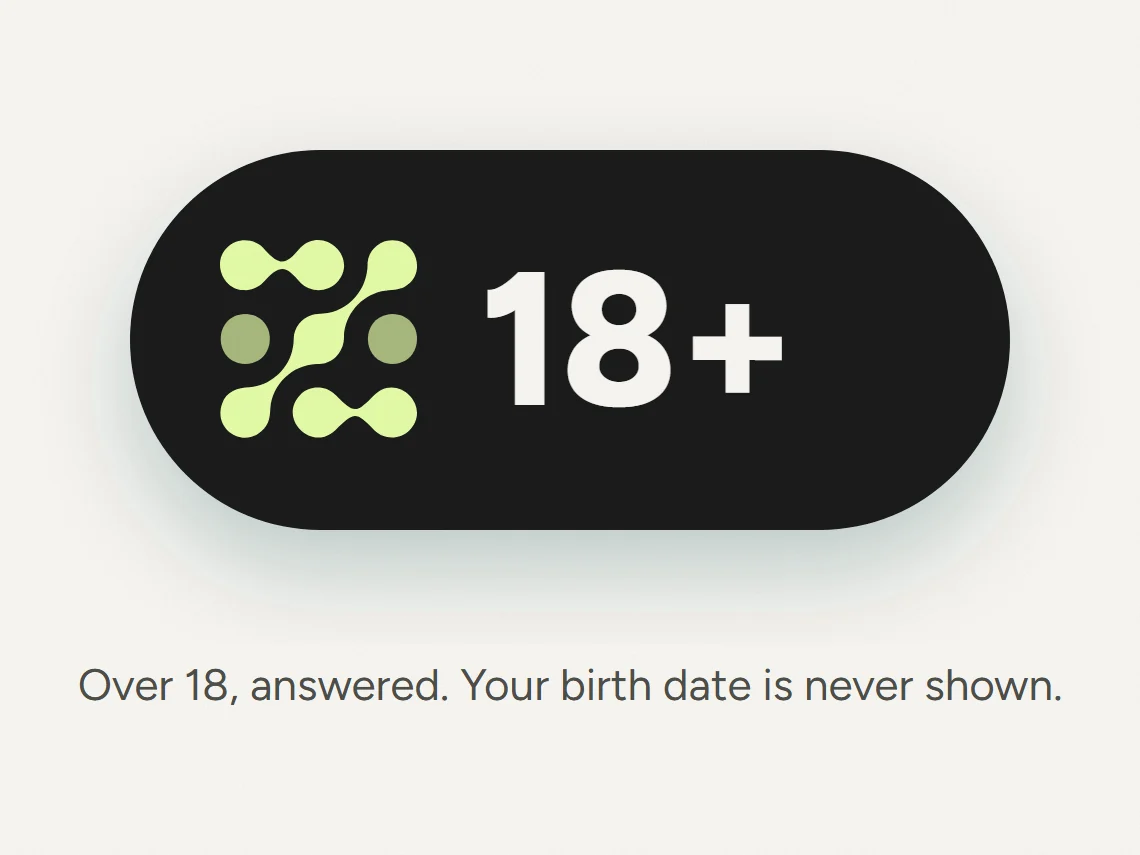
The 18+ mark is set when you’re over 18 and is otherwise simply absent. A bar, a marketplace or a platform gets a clear yes without ever learning your birthday, and we never learned it either. Being under 18 was never a state we recorded, so there’s no list of minors to leak.
Behind the scenes
Who holds what.
Two companies touch your check, and each holds only what its job needs. A company can’t lose, leak or be made to hand over a field it never took.
Runs the check
Reads your ID, runs the live selfie check and matches face to document on their side. They hold the document image and liveness video under their own retention terms.
SOC 2 Type II, ISO 27001 and FedRAMP Ready (High baseline, announced November 2025) are Incode’s certifications.
Gets a narrow result
Your name, your city, region and country, an 18+ signal, the still photo that becomes your badge photo, and whether the check cleared and when. Not the document. Not the video. Not your date of birth.
Sees the least of anyone
That you’re a verified human, your name and photo, and 18+ if it applies. Nothing about your document.
What Fuzzy stores
- Given name and family name
- An 18+ signal, set at verification
- Verification status and its dates
- City, region and country, from the document
- The still photo from verification, plus your email address
What our database never keeps from your check
- A date of birth
- An ID document image or liveness video, in our database
- A face template
- Social Security numbers
- Home addresses, or ID and document numbers
- A record that anyone is under 18
This is built into the code, not just the policy. Incode’s response can carry more than we take, including a home address and a date of birth. Our code copies an explicit list of fields, those aren’t on it, and a test fails the build if they ever come through. Your badge photo is a photograph, not a faceprint, and the face match runs at Incode, never against a copy we hold.
What you control
Your badge. Your call.
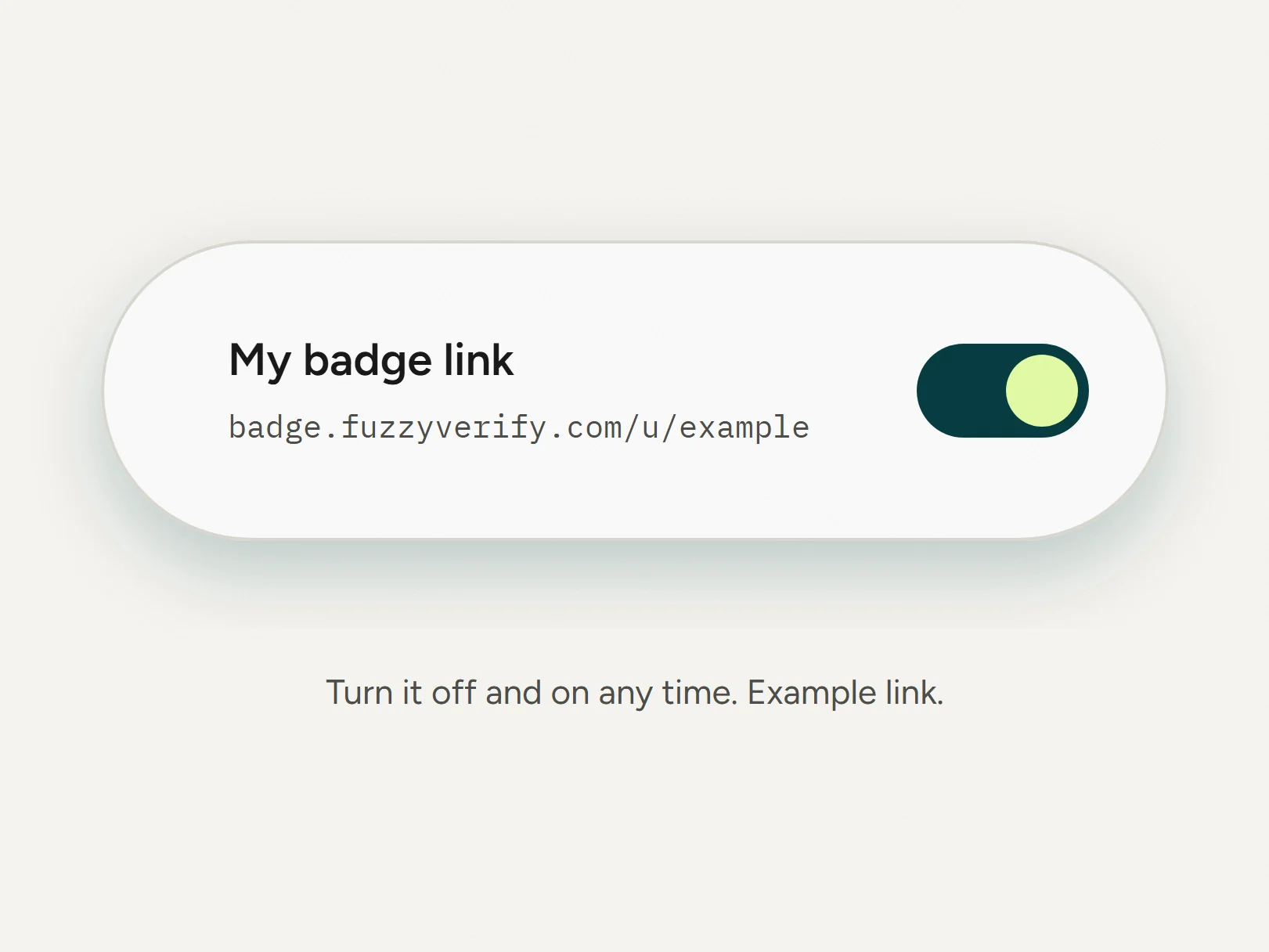
- Turn your badge link off and on whenever you like.
- Choose what to show with Present ID in the app.
- Update your photo through a quick face match.
- Delete your account right in the app. Your identity details are removed, and a minimal record of each verification attempt stays as the basis of the outcome record.
Questions
Quick answers.
Do I pay anything?
No. A person never pays to be verified. Organizations license the ability to read the credential.
What happens if my check doesn’t clear?
Fuzzy reports that a check did not clear, never why. In the app you can see which part needs another try. Our support team can see the diagnostic detail, so they can help if you think a result was wrong, and it never appears on a partner or public screen. Nobody is blocked for not completing a check: organizations keep their own human review path and every decision.
Does the person checking me need the app?
Not for your link. Anyone can open your badge link with no app and no account. Scanning your QR in person is member to member, in the Fuzzy app.
How long does my badge last?
12 months. It stays live for the full term, we remind you before it’s due, and renewal is the same full quick check.
Where does the face match happen?
At Incode, our identity provider, against their own record. Fuzzy keeps the still photo as your badge photo and stores no face template from your check.
Can I get the full technical detail?
Yes. Our technical brief is written for security reviewers, with the field-by-field inventory, backups and retention. Ask and we’ll send it.
Ready when you are
Be hard to fake in about 55 seconds.
Verify once in the app, then share your badge anywhere. Reviewing Fuzzy for your organization? Ask for the technical brief.