I saw his face. Two or three times a week, for 8 months.
I met him on a dating app. On paper he was close to perfect: a college athlete, a wonderful dad, a top lawyer at a Fortune 500 company, and a man of God, an actual pastor. A few of those things were true. Almost none of it was.
I want to be precise about what went wrong, because it is not what people assume. I was not talking to a stranger hiding behind a stolen photo. I saw him, constantly. What I could not do, once the lies started to pour out, was work out which parts had ever been real. That is the part nobody warns you about. It is not one lie you catch. It is losing the ability to anchor anything at all.
I had spent 14 years selling software to the most heavily regulated buyers in America. None of it protected me. And the advice we still give people in my position is essentially to be smarter, which would not have saved me either.
So I went looking for the thing that would have helped, and it did not exist. A simple way for one person to confirm another person is who they claim to be. Platforms verified people for their own benefit, inside their own walls, and the verification never left the building.
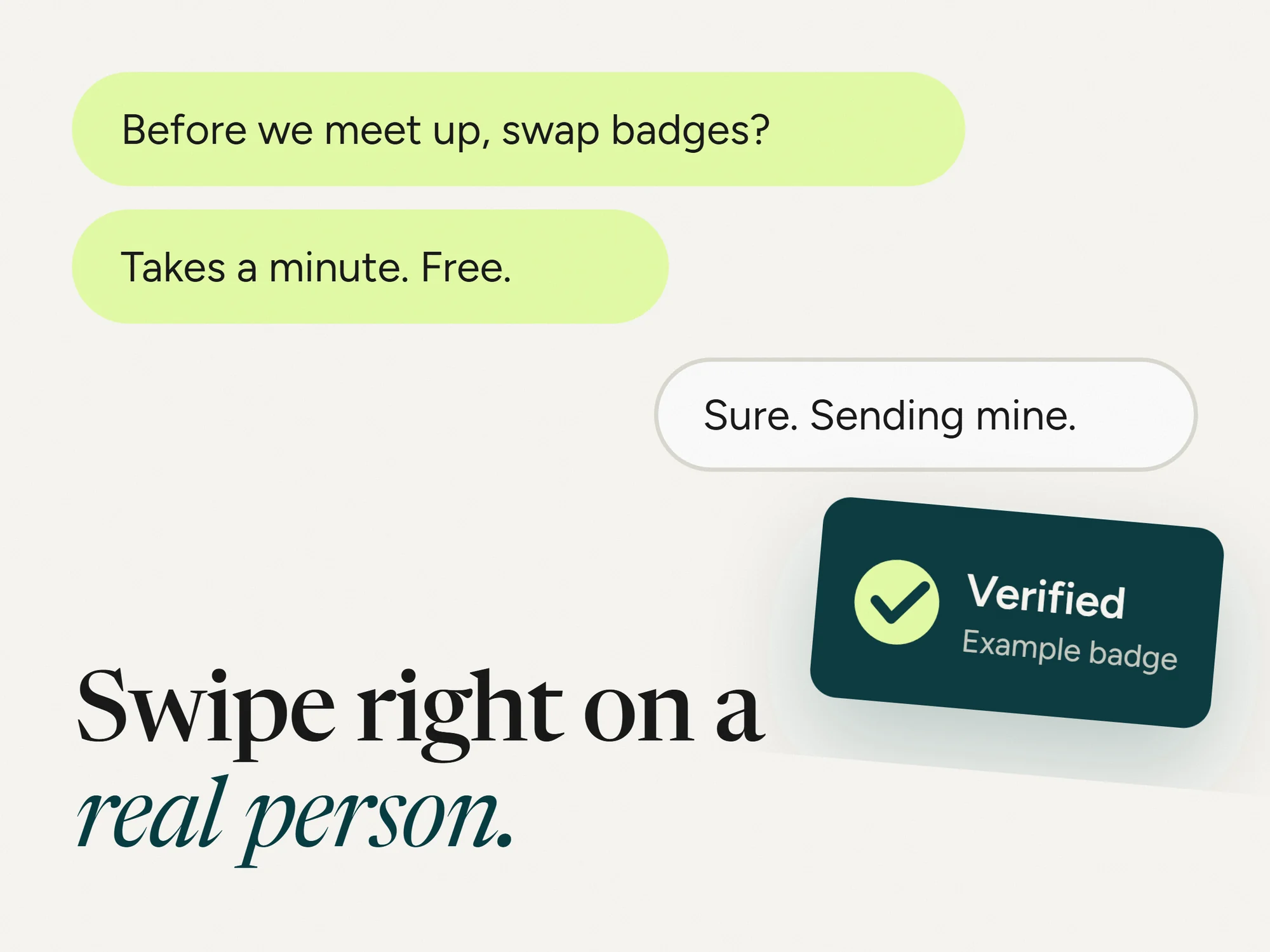
Here is what Fuzzy would and would not have done for me. It would not have told me he was not a pastor. No credential can do that, and I will not pretend otherwise. What it would have given me is the floor: proof that the man on my screen was a real person, and the one he said he was. You cannot evaluate a single thing someone tells you until you have that much. I made every decision without it.
This started as a safety app for women, because I thought that was the shape of the problem. It is not. Scams and fraud are rampant and they reach everyone. Some audiences get targeted harder and we build for them on purpose, but nobody is exempt. Lemons to lemon martini. A very bad 8 months turned into infrastructure.
There is one part I did not plan. The first school to put this into production was Barry University, my alma mater, which gave me a soccer scholarship a long time before it ever ran my software.
Our whole lives are online and we still have no practical way to know whether someone is who they claim to be. Making sure this does not happen to someone else is my life’s work now.
Kalie